
The continuous exploitation of Kosovo's underground resources during the High Middle Ages, particularly from the second half of the 14th century, is considered a major factor that influenced the development of Prishtina into a large commercial center. A major impulse for the development of the city into a large hub during the second half of the 14th century and the first half of the 15th century was given by the Ragusans, who transported highly sought-after ores throughout Prishtina and its ore-rich surroundings to all the Adriatic cities. During the High Middle Ages, Prishtina is mentioned for the first time in the second half of the 13th century. However, the rise of Prishtina as a significant center came particularly after 1325, when Stefan Dečanski requested that the Ragusans bring the St. Demetrius tribute to him in Prishtina.1 Meanwhile, in 1342, the Byzantine Emperor John Kantakouzenos, who found refuge with King Dušan in that year, provides a description of Prishtina. According to the emperor in question, Prishtina (Pristinon) was an unfortified village where only the royal court held any special value.2
Ragusans and Prishtina and the First Records of the City
After the death of Uroš III, the Serbian Empire fell into anarchy. It was divided into many principalities, ruled by vassals and former officials of Uroš III. At that time, Prishtina became part of the domains of Vuk Branković, who in 1387 laid the foundation stone of the Ragusan colony in Prishtina. In fact, Vuk Branković entered into an agreement with Ragusa that year. According to his charter issued in Prishtina on January 20, 1387, the status of Ragusan merchants in the Branković region, and thus also in Prishtina, was regulated.3
It is worth noting that the first Ragusan contacts with Prishtina are recorded at the end of the 1270s. At that time, a Ragusan nobleman of Albanian origin, Gregorius Marini de Petrana (1253–1280), was appointed consul in Brskovo. To reach this destination, Gregorius M. de Petrana traveled through Prishtina, among other places. However, apart from this piece of information, we find no further details regarding his stay in Prishtina.4 Meanwhile, a century later, specifically in the years 1379 and 1380, we encounter Marin Nikolla, a Ragusan citizen from Ulcinj, in Prishtina.5
By the end of the eighth decade of the 14th century, the number of Ragusans in Prishtina was steadily increasing. Their presence is now verified in numerous documents preserved in the Historical Archives of Dubrovnik. From the testament of the Ragusan Matco de Suezda, dated November 9, 1387, we learn that he left five ducats as aid for the final works on St. Mary, a Catholic church in Prishtina.6
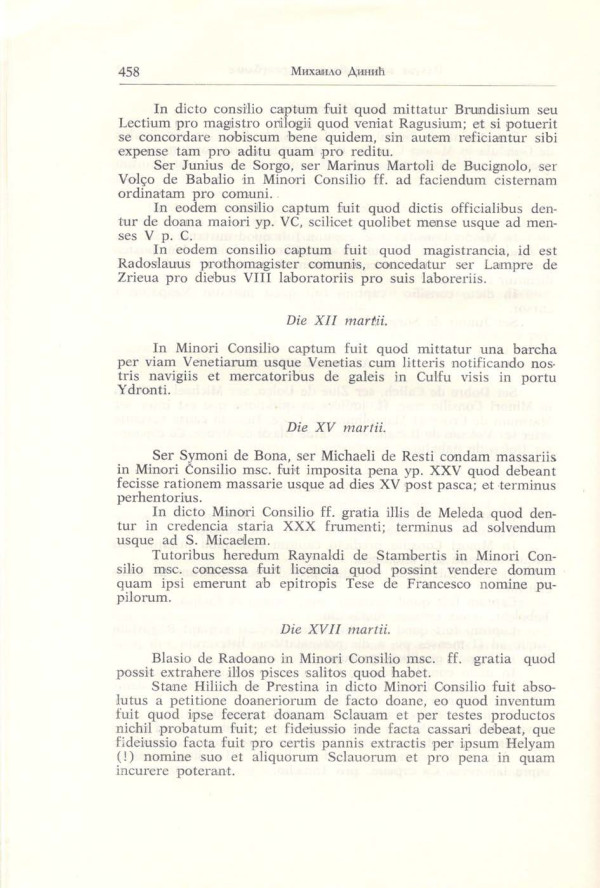
According to a document dated March 17, 1388, Stan Hilich from Prishtina informed the Ragusan Minor Council about certain matters regarding the customs office of Prishtina.7
When discussing the relations between Vuk Branković and the Lazarevićs during the first years following the Battle of Kosovo, a declaration by the Ragusan Marinus Demetriuich, dated August 6, 1392, holds special value. The declaration states that Marinus was ordered by the Ragusan rector to personally hand over a belt (a precious girdle), which the Serbian princess had left as a pledge in Ragusa, to her in Prishtina (in Pristina ad ipsam dominam comitissam).8 At that time, Vuk Branković was forced to submit and pay tribute to the Ottomans. In connection with this, the prince and his family members were compelled to send their valuables to Ragusa for safekeeping.9 Vuk Branković continued this practice of safeguarding his treasury further, and thus, in January 1395, the Ragusans accepted 397 liters of silver from the prince for safekeeping. Only three days later, Smil, an official of Vuk Branković, sent another 693 liters of silver to Ragusa. The final deposit, meanwhile, which reached an amount of 790 liters of silver, was delivered on January 10, 1396.10
At the beginning of 1396, the Ottomans attacked the Branković region and captured Prishtina. Following these events, Vuk Branković sent Smil through Ragusa to Zeta. On this occasion, the Ragusans provided Smil with a boat to continue to Kotor and decided to send written recommendations to the "lord," through which Vuk Branković wished to be informed in detail about his envoy's stay in Ragusa.11 In this year, we find Franchus f. Mate de Basilio (1353–1396) in Prishtina, who was involved, among other things, in the buying and selling of salt. Among all the members of the noble Basilio family settled in Ragusa in the 14th and early 15th centuries, Franco de Basilio was the only one who appeared holding functions of great political responsibility.12
At the beginning of the 15th century, the customs office of Prishtina represented an important source of wealth for several Ragusan noblemen. This conclusion is reached when considering the fact that many Ragusans who leased the Prishtina customs office regularly fulfilled all their obligations to the owners of the customs. This phenomenon is also proven by contemporary documents, such as a document written in Prishtina on March 15, 1402, which certifies that the Ragusan nobleman Marinus Cinçalunoli (or Grede) had fulfilled all obligations toward the owners of the Prishtina customs: Prince Stefan, Vuk Branković, and Lady Eugenia.13 In an identical document issued four years later from the office of the Brankovićs, specifically on March 25, 1406, Lady Mara and her sons, Grgur and Đurađ Branković, informed the rector and the Ragusan patriciate that the nobleman Ser Andree Dominici de Menze had fulfilled all obligations regarding the utilization of the customs of Prishtina and other markets within the Branković properties.14 Despot Stefan Lazarević also conducted correspondence from Prishtina on July 4, 1414. In the letter, the despot informed the Ragusan rector and patriciate of the fulfillment of all obligations by their fellow citizen Benedictus de Gondola regarding the lease of the Novo Brdo customs office.15 Meanwhile, according to a document issued by the Branković office in Prishtina at the end of 1411, Mara Branković states that "your citizen Bogiša (Bogissa Radmilouich – J. D.) held the customs in Trepča and in Prishtina and elsewhere."16 It is worth emphasizing that the Ragusans who leased the customs of Prishtina had obligations not only to members of the Branković family but also toward church revenues (bir, vrhovina, pomen). In this regard, the Ragusan nobleman Nicola de Sorgo and his brothers Matcho and Pasqual, who held the customs of Prishtina at the end of the 1420s, were also obligated for the "Bir i bral po zemlji" tax.17
At the beginning of the 15th century, Kosovo once again became a theater of battles. The wars were also accompanied by a plague epidemic. As soon as it was informed about the situation in Kosovo, the Ragusan Government issued an order stating that all citizens of Ragusa who had arrived from areas affected by the plague epidemic, such as Prishtina and Novo Brdo, had to leave Ragusa immediately. Those who did not comply with the order faced a fine amounting to 100 perpers.18
As mentioned above, at the beginning of the 15th century, Kosovo had fallen into a difficult situation. However, even under these conditions, we still find Ragusans in Prishtina. During the year 1403, two noblemen lived in Prishtina, Dominicus de Babali and Junius de Sorgo, who traded silver along the Prishtina-Ragusa route.19
The Ragusan Colony in Prishtina According to Numbers
The fact that the number of Ragusans in Prishtina was growing larger, along with the Ragusan Government's interest in the Prishtina colony, is evidenced by data from a document dated March 18, 1409. From the content of this document, it is established that the Ragusans had complained to King Sigmund that the Hungarian army, during an attack, had burned Prishtina, causing losses to the Ragusan citizens who were living and working in the city at that time.20
Since the records of the Ragusan councils for the years 1404–1407 have not been preserved, it is difficult to discuss their presence in Prishtina during those specific years. However, from 1407 onward, when records for judicial commissions began to appear, it is possible to speak with documented certainty about the presence of Ragusans in the city. Thus, in 1407, we find eight Ragusans in Prishtina. Among them, Nichxa Milloslaglich appears most frequently; in 1409 there were eleven, with Pribislao Maroevich appearing most frequently; in 1410 there were eight, with Bogoslao Selimbar, Milath Velayenich, Nichxa Miloslaglich, and Boganus Gripouich encountered most often; in 1411 there were six, with Radoslav Rendiq mentioned most frequently; in 1412 there were six; and in 1413 there were eleven, among whom Matcho de Ribiça carried out the most vibrant activity.21
It is worth noting that from 1413, the number of Ragusans in Prishtina tripled compared to the final years of the 14th century and the first years of the 15th century. Meanwhile, during the 1420s, the Ragusan colony in Prishtina formed the numerically largest colony in Kosovo. This conclusion is verified by the appointment of judicial commissions to resolve conflicts among Ragusan citizens who worked and lived in Prishtina. The best research results in this area have been provided by J. Tadić and D. Kovačević–Kojić.22 The scholars in question, conducting research in the Historical Archives of Dubrovnik, particularly by flipping through the yellowed pages of the books of the Ragusan Minor Council and the joint book of the two councils,23 provide us with this overview regarding the number of Ragusans in Prishtina during the years 1414–1453.24
1414 / 39
1415 / 33
1416 / 41
1417 / 69
1418 / 74
1419 / 79
1420 / 97
1421 / 74
1422 / 113
1423 / 145
1424 / 157
1425 / 139
1426 / 144
1427 / 117
1428 / 122
1429 / 115
1430 / 47
1431 / 57
1432 / 44
1433 / 118
1434 / 124
1435 / 140
1436 / 176
1437 / 208
1438 / 218
1439 / 133
1440 / 109
1441 / 35
1442 / 97
1443 / -
1444 / 11
1445 / 107
1446 / 104
1447 / 51
1448 / 80
1449 / 17
1450 / 33
1451 / 19
1452 / 15
1453 / 6
From the above overview, it is observable that the number of Ragusans increased significantly from the year 1422. From this time onward, except for the years 1430, 1431, and 1432, we continuously find more than one hundred Ragusans in Prishtina. In 1437 there were two hundred and eight, while in 1438 there were two hundred and eighteen.25
An important factor regarding the fluctuations in the number of Ragusans in Prishtina, from the 1420s until its fall, was the Ottoman campaigns. Our conclusion is tied to the fact that the fall of Smederevo in 1439 led to a reduction in the number of Ragusans in the northern parts of the Serbian Despotate. However, since the southern parts of the despotate had not yet fallen under Ottoman rule, Ragusan colonies still thrived in these areas. This is particularly noticeable from the presence of Ragusans in Prishtina during the years 1439 and 1440. A year later, after the Ottomans conquered Novo Brdo, the Ragusan Government, due to the unfolding situation, ordered its merchants to no longer go to this city or to other cities that had fallen under Ottoman rule. Because of these mentioned conditions, Prishtina is rarely found in the decisions of the Ragusan Minor Council for the years 1441 and 1442. This state of affairs did not last long, as the Ragusan Government obtained new privileges from the sultan as early as 1442, about which it immediately informed its merchants in Novo Brdo, Prishtina, and Rudnik.26
The temporary conquest of Prishtina by the Ottomans caused some obstacles, but it did not interrupt the economic development of Prishtina. Ragusan activity in this city began to revive again after Đurađ Branković reached an agreement with the Ottomans. Following the restoration of the Serbian Despotate in 1445, the number of Ragusans in Prishtina was just as large as before. However, subsequent events showed that such a situation was momentary and temporary.27
After detailed research into the decision books of the Ragusan Minor Council, the scholar D. Kovačević–Kojić established that the Ragusan colony in Prishtina, during the years 1414–1433, numbered 1,413 members. It is worth noting that this total figure includes only those Ragusans who were involved in some form of judicial lawsuit. Others, meanwhile, who did not have such cases, were not included in the mentioned number. Therefore, the number of Ragusans in Prishtina was certainly larger than the stated figure, a conclusion reached by D. Kovačević–Kojić based on the preserved archival material.28
The duration of the Ragusans' stay in Prishtina varied. The vast majority of the members, around 930, are encountered only in passing, as these Ragusans are recorded only once. As noted above, during the first half of the 15th century, Prishtina was a major commercial center; therefore, the transit of Ragusans through this city was very high. Consequently, we can conclude that many Ragusans who passed through or stayed for a short time in Prishtina were not recorded at all. On the other hand, there are those who were connected to the city for a long time and, as such, stayed in Prishtina for one, two, three, four, or more years.29 In this regard, Ragusans who stayed in Prishtina permanently or with short interruptions were not rare. From archival data, it is noticeable that the number of Ragusans who operated and lived in Prishtina for a long period was quite substantial, and this is reflected in the following numerical table:
Years of Stay / Number of Ragusans
6 / 9
7 / 8
8 / 5
9 / 4
10 / 9
11 / 7
12 / 7
13 / 7
14 / 5
15 / 10
16 / 9
17 / 4
18 / 3
19 / 9
20 / 2
21 / 5
22 / 5
24 / 5
25 / 1
26 / 5
28 / 5
29 / 1
31 / 1
32 / 3
33 / 1
As seen from the table, sixty-seven Ragusans lived in Prishtina for 10–20 years; meanwhile, twenty-five lived there for 20–30 years; and five Ragusans lived there for over thirty years (Matheo de Crose, Michele de Crose, Niksha Vaseokoviq, Srgj Radosalić, and Nikola Pripko Radulinoviq).30
We know that Ragusan noblemen were primarily connected to those commercial and mining centers that undoubtedly offered them great profits. When considering this fact and the data showing that several Ragusan noblemen stayed in Prishtina every year—totaling 113 Ragusan noblemen between 1414 and 1453—it naturally follows that Prishtina represented a center of great importance for Ragusa. In the first half of the 15th century, members of several noble families lived in Prishtina, such as the Sorgo family: Nixa A. de Sorgo, Damian J. de Sorgo, Pasqual J. de Sorgo, Jacomo A. de Sorgo, Jacomo J. de Sorgo, Johannes J. de Sorgo, Metheo de Sorgo, Mecthele de Sorgo, and Petre de Sorgo; members of the Gondola family: Benedicto de Gondola, Damian de Gondola, Fredericho de Gondola, Junius J. de Gondola, Jacomo de Gondola, Johannes M. de Gondola, and Nicola de Gondola; members of the Crosio family: Metheo and Michele M. de Crose, Marinus J. de Crose, Marinus and Andreas de Crose; members of the Georgio (Yorzi) family: Nicolaus J. de Georgio, Damian J. de Zorzi, Aloui J. de Zorzi, Sigismundo de Zorzi, and Johannes M. de Georgio; and members of the Martinussio family: Junii N. de Martinussio and Martinus N. de Martinussio.31
Albanian Nobility in Medieval Prishtina and the Social Life of Ragusans According to Contemporary Testaments
During the first half of the 15th century, several members of the noble Albanian Tani family from Ulcinj lived in Prishtina. These noblemen came to this city from Ragusa. According to a correspondence between the Ragusan Government and Kimo Tani, the Ragusans refer to the latter as "our honorable citizen."32 Mak Tani was the first member of the family to come to Pristina (1414–1426), followed by his children: Marini (in 1424, then again in the years 1433–1448), Shtjefni (in 1442, 1446, 1447), Gjoni (in 1445), and, the most prominent among them, the fourth brother Kimo, who lived in Prishtina for fourteen years. During his stay in this city, he was elected to judicial commissions 130 times.33
Members of the noble Cobogo family, who were well-known Ragusan merchants, were also connected to the Prishtina market. In their commercial ledger, Nicola T. de Glavato, who lived in Prishtina during the years 1415–1442, is frequently mentioned. Through this merchant, the well-known merchants of the Cobogo family were supplied with silver purchased in Prishtina, which they then, in most cases, sold in Venice.34
Flipping through Ragusan archival material, we also encounter Ragusans who compiled their testaments in Prishtina. Such documents provide interesting data and are therefore of great value for understanding Prishtina’s past. The Ragusan testaments compiled in Prishtina exclusively provide details regarding the wealth of the testators, expressed in the possession of raw silver and ready cash. Similarly, the testaments mention various jewelry, silver items, weapons, fabric from Vicenza, Turkish bags, Hungarian textiles, household furniture, clothing, and musical instruments, such as the tollombaz (kettledrum). According to the Testamenta Notariae series of the Historical Archives of Dubrovnik, we encounter the following Ragusan testators in Prishtina: Predoiuich Bratoslao,35 Mergeuich Vochossau,36 Bogdanoich Radiuoy,37 Vocemilich Radossau,38 Miomanoouich Michaz,39 Vitchouich Jacob,40 Perchouich Milat,41 Boghasaolich Bosidar,42 Jacobus filius de Giuicho leuaia decto Brodarouich.43 There were also Ragusans who owned real estate in Prishtina; for instance, from the testament of Petar de Bratoslao, it is observed that he had owned two houses, which he had sold to the Ragusan Georgio de Lucius.44 The Ragusan Jachxa R. Prvanouich also owned a house in Prishtina.45 In the testament of Radosav Vuçemiliq, compiled in Prishtina,46 it is interesting to highlight the data showing that every Ragusan merchant operating in the Balkan Peninsula possessed Ottoman coins.47
In order to realize their interests, Ragusan merchants living and operating in Prishtina frequently fell into conflicts among themselves regarding commercial transactions. Such conflicts were resolved by Ragusan judges and consuls elected by members of the respective colonies. There were also cases when Ragusan citizens entered into conflicts with fellow citizens and, in these instances, engaged the Ottoman administration. In one such situation, the Ragusan Francho Camarich even renounced the Christian faith and accepted Islam. In 1421, Franco delivered a lawsuit to the qadi of Prishtina filed against Marinus de Sorgo. According to the lawsuit, which he brought two years later in Ragusa, Francho Comarich had managed to convince the Turkish qadi in Prishtina through falsehoods, who then sentenced Marinus de Sorgo to pay a fine amounting to 48 liters of silver. Marinus also had to pay an additional sum of 32 liters of silver to be released from prison. Although Marinus proposed to Francho that they present their dispute to a Ragusan court, Francho refused, knowing full well that he would not fare well with lies in Ragusa, and filed the lawsuit against Franchus Camarich, not only because he harmed Marinus Sorgo, but also because he acted "contra ius et iustititiam ac statuaa et ordines Ragusii" (against law and justice, and the statutes and orders of Ragusa).48
In a physical altercation that took place in Prishtina between two Ragusans, a certain Nikollë Tivarasi is mentioned as a witness. Also from Bar (Tivari) were Jak Centivaliu (in 1421, 1423, 1424) and Pjero Piçikoviq (in 1442). At that time, we also encounter two men from Kotor in Prishtina, Pierco de Baso (1426) and Ratco de Baso (1427, 1428), as well as Ratcho Spani, a goldsmith from Drisht.49
Conflicts among Ragusans in their colonies sometimes took on broad dimensions, particularly when the Ottomans became involved. This is best illustrated by the following data: in 1440, when the Turkish envoy Isa Bey was expected to arrive in Prishtina, three Ragusans—the monk Stjepko Radulinoviq, Niksha Nemanjiq, and Bogeta Milovanoviq, for whom there is no data to confirm whether they were actually appointed to oversee the Ragusan colony in Prishtina—agreed among themselves to engage all Ragusans working in Prishtina at that time for the formal reception of the Turkish envoy Isa Bey. Later, these three Ragusans declared that they had acted in that manner to protect their own property. Others, meanwhile, accused them of being collaborators with the Ottomans, and the accusation was directed particularly against Bogeta Milovanoviq due to his organizing of the formal reception in agreement with the Turkish envoy.50 In the accusations made by the Ragusan merchants of the Prishtina colony against their three fellow citizens, particular emphasis was placed on the order by Stjepko Radulinoviq, Niksha Nemanjiq, and Bogeta Milovanoviq, according to which all Ragusans who did not attend the formal reception were to be fined five perpers each. Bogeta Milovanoviq demanded five perpers even from Ragusans who had not been informed at all about the organization of the reception. Given these divergent statements, the Ragusan court in Ragusa was faced with a difficult task, as it was not easy to establish which party was telling the truth. Although the Ragusan Government took punitive measures against the perpetrators of the conflict and intervened in various ways to prevent such cases, Ottoman interventions caused some conflicts among Ragusans in their colonies to flare up even further.51
Contacts of the Ragusans with the Ottomans in Prishtina, the Period After 1440
In the unfolding situation, the Ragusan Government began to lose control over its merchants in the colonies of Kosovo. Several Ragusan merchants, especially those in Prishtina, made independent agreements regarding customs and the amount of customs payments. Following the fall of the Serbian Despotate, its southern parts were now ruled by the governor of Skopje, Isa Bey, with whom the Ragusans of Prishtina immediately entered into contact in June 1440. They reached an agreement regarding customs and influenced him to send one of his envoys to Ragusa. However, in August of that year, the Ragusan merchants received a harsh and decisive response, stating that they were forbidden from interfering in the competencies of the Ragusan state. The Ragusan Government, meanwhile, characterized these interventions by the Ragusan merchants as harmful and short-sighted.52
Mutual conflicts among Ragusan citizens have left traces in archival books, which exclusively contain material related to complaints coming from places outside Ragusa (Lamenta de foris). Such complaints are encountered mainly at the beginning of the 1440s. From them, it is observable that Ragusans plundered and corrupted their fellow citizens and the Ottomans. With the help of the Ottomans, some Ragusans faced no difficulty in imprisoning their fellow citizens and subsequently confiscating their property. Such Ragusans resolved their conflicts with the help of the Ottoman qadi. Meanwhile, following the judgment, the property of the convicted party was usually confiscated. The priest Stjepko Radulinoviq also fell into a trap set by his fellow citizen, against whom Radivoje Radovanov filed a lawsuit. Following the trial, the Turks confiscated his property.53
Conflicts among Ragusan citizens and the interference of the Ottoman administration in them directly contributed to the destabilization of the situation in the Ragusan colonies during the 1430s and beyond, until the fall of Kosovo under Ottoman rule. This conclusion is linked to the fact that during this time interval, we encounter a series of conflicts between Ragusans and Ottomans. As early as 1426, a conflict between Ragusans and Ottomans was recorded. In this year, Murad II advanced into Serbia, and this Ottoman campaign was accompanied by looting and abuses. In the very same year, the Ragusan nobleman Petar Pucić was traveling with a caravan toward Novo Brdo and Prishtina. In the locality of Uglar, several merchants separated from the caravan and went to Prishtina with the purpose of paying the required customs duty. Petar, meanwhile, remained with several servants to look after the goods. However, eight Turks soon arrived at that location and demanded salt. Since they did not find this commodity, they bound Petar Pucić and plundered his pouch containing ten ducats and some dinars (currency of the Balša family), a value totaling 25 perpers, as well as 3 drams of akçe. Afterward, they took Petar to Prishtina and released him from prison only after a ransom of 1,000 akçes was paid for him.54
In March 1430, following the fall of Thessalonica, Murad II, together with the beylerbey of Rumelia, went to Epirus. At that time, the sanjakbey launched an invasion into Albania, conquering several cities belonging to Gjon Kastrioti and the land of Tanush Dukagjini. In this situation, Ragusan envoys were tasked with negotiating with Isa Bey regarding Albanian customs. Prior to this, they were engaged in Prishtina to find a Ragusan merchant who had experience with Albanian customs, so they could go together to Isa Bey to present a request for a reduction in customs, arguing that under the new conditions, trade would experience a revival while Isa Bey's profits would be greater. The Ragusan delegation arrived in Skopje on October 3, 1430. However, Isa Bey rejected their requests on the pretext that he dared not undertake anything without the sultan's consent.55
Several Ragusan merchants were oriented toward and collaborated with Ottoman merchants. In addition to data of this nature and regarding Ottoman obligations, we also find records of Ragusans being debtors to the Turks. The Ottomans as creditors were not at all afraid regarding payments, since power in these regions was in their hands. Thus, for failing to repay a debt, a Turk named Gjorman imprisoned Pjerko, the son of Stan Ilić, in 1436, who remained in prison until a fellow citizen paid his ransom.56
Ragusan merchants working in Prishtina, having been informed about imprisonments and confiscations in 1441, took certain measures to hide their wealth. During arrests, the Ottomans conducted interrogations, demanded confessions, and beat them severely. Under these conditions, the Ragusans began to talk and denounce one another. This led to the opening of judicial processes in Ragusa. Regarding this Ottoman practice, we encounter a concrete case that occurred in Prishtina. Thus, during the year 1441, two Ragusans arrived here, Bozhiçko Çifuti and Gjurko Dunaviqi. Bozhiqko, terrified by the threats, confessed to things that Gjurko himself also admitted.57
In April 1442, the Ragusan Government informed its merchants working in Novo Brdo, Prishtina, and Rudnik about the peace agreement with the sultan, according to which Ragusan merchants were granted privileges.58
In 1444, following the restoration of the Serbian Despotate, the Branković region still remained under the Ottoman regime. On one occasion, the Ragusans made a plea to Đurađ Branković to use his authority with the Turkish governor so they would not obstruct Ragusan imports from Prishtina. From the declaration of the despot in question, it is observed that he could not change anything, since his father, Vuk Branković, had specific obligations toward the sultan: "tromento non po, ezzeto che non servir e stare alli luy alpatti havuto con lo imperador turco (1445)" (therefore he cannot, except to serve and abide by his pacts made with the Turkish emperor). The declaration continues to state that he had to adhere to the principles of the agreement concluded in August 1444. In March 1445, regarding the innovations introduced by the Turkish governor at the Prishtina customs office, the Ragusans once again petitioned him to take action to address their demands. However, Đurađ Branković, just as in the previous year, did not take any action.59
At the beginning of the 1450s, Ragusa submitted to pressure from Duke Stefan and the Ottomans. 60 Ragusan merchants operating in the Balkan Peninsula fell prey to the Ottomans, as they could not protect themselves, while the Ragusan Government refused to pay the tribute. In January 1455, an envoy brought a letter to Isa Bey, to which a letter from the Ragusan merchants living and working in Prishtina was attached. Meanwhile, in April of that year, we encounter an envoy of Isa Bey Evrenoz in Ragusa, who had come to present several demands to which the Minor Council had to respond. From that time onward, the issue "super salvoconductu impetrando ab impreratore Turchorum pro mercatoribus nostris" (regarding obtaining a safe-conduct from the Emperor of the Turks for our merchants) was continuously raised in the Ragusan Senate, which was first suspended and then left unresolved.61
The Ragusan merchants of Prishtina frequently came into conflict with those of Novo Brdo, either as the accused or the accusers. Sometimes, following decisions of the Minor Council, upon the appointment of judicial commissions, provision was made for the interested parties to meet in either Prishtina or Novo Brdo. The only difference was the judicial commission itself, which was composed of Ragusan noblemen in each of these two distinct commercial centers.62
In August 1435, the Ragusan Government appointed three Ragusan noblemen living in Prishtina as "oficiales" (officials) and ordered them to go to Novo Brdo for the purpose of investigating a complaint by Pasqual M. de Goze against the Ragusan nobility of Novo Brdo, who had plundered a quantity of his silver.63 From this perspective, several individuals from Prishtina are found in the ledger of the Ragusan merchant M. Lukarević, who lived and worked in Novo Brdo. In the debtor book of M. Lukarević, we find the following residents of Prishtina: Juan Cchonxi,64 Iachomo de Proculi65 and Pauao Vuchadinouich.66
In several instances, we also encounter Ragusans in the Prishtina market as slave traders. In 1421, two Ragusan merchants, Benedictus q. Mathei de Schierye de Prato and Nicola q. Tuertchi Glauich, agreed on the sale of a Bosnian girl named Milica, a ten-year-old slave, who had been purchased for 10 ducats from Ottoman merchants in Prishtina.67 With regard to the buying and selling of slaves in Prishtina, we also encounter a case in the year 1442. In this year, the Ragusan Ziulcus Ratcouigh filed a lawsuit against his fellow citizen Boghetta Pribisaligh, who in Prishtina (dicens quod cum ipse Bogheta veniret in Pristina) had abducted Helena, a slave belonging to a Turk named Oruç (Ipse deduxit unam slavam cuiusdam Teucri nomine Oruc et nomen sclave est Helena). For this reason, the Ottomans imprisoned Ziuicus Ratcouigh, who was forced to pay 700 perpers for this slave woman.68
-
1
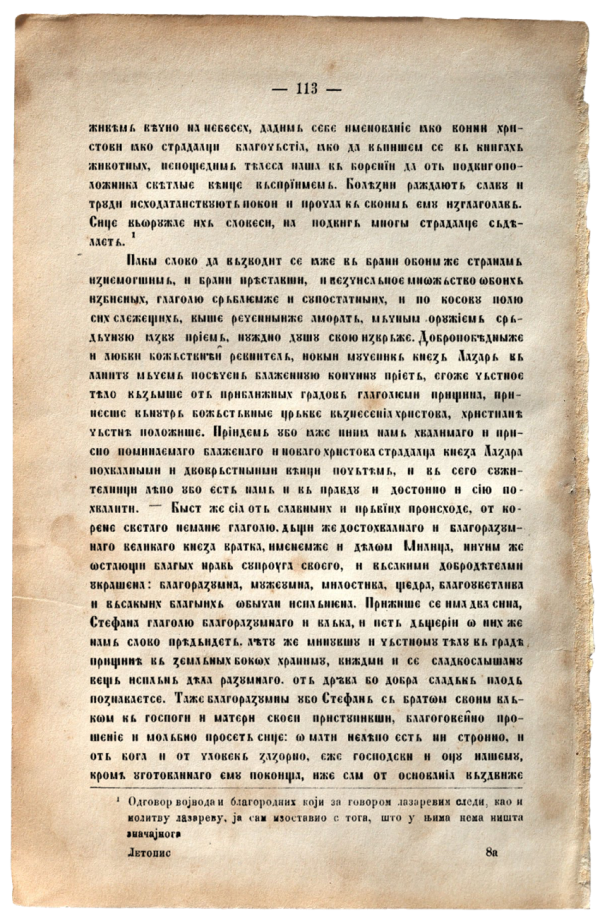
L. Talloczy, C. Jireçek, E Sufflay. Acta et diplomata res Albaniae mediae aetatis illustrantia, I. Vindobonae, 1913, nr. 710, f. 213 — “Stephanus Uros III rex Serbiae, comuni Ragusil praecepit, ut at ve cophalla Elias sive Thomas veniant tributium S. Dimitri solvant (1325, mense octobris)"; K. Kostić, Naši gradovi na Jugu, Beograd, 1922. f. 49.
-
2
K. Jireçek, Istorija Srba, II, Beograd 1978, f. 8–9. 21. 94. 230.
-
3
F. Miklosich, Monumenta Srbica, Wien, 1858, 1. 207–09: Lj. Stojanović, Stare srpske povelje i pisma, 1—1. Beograd — S. Kariovci, 1929, 1. 136-139.
-
4
G. Cremošnik. Kancelarski i notarski spisi, Beograd. 1932 f. 264; I Manken. Dubrovački patricijat u XIV veku, Beograd, 1960, f. 358.
-
5
HAD, Diversa Notariae, anno 1370-1379; Reformationes anno 1378–1381; L. Tallozczy. C. Jirecek. E. Sufflay, Acta et diplomata Res Albaniae mediae aetatis II, nr. 322. f. 75 — Anno 1379, 2 lunii Ragusii “Marinus Nicolai de Dulcino civis Ragusil" memoratur, dhe Anno 1380, 8 octobrik Consilium Rogatorum përmendet “Maroe de Dulcino stare in Priština super suis rebus".
-
6
HAD (State Archives of Dubrovnik), Testamenta Notariae IV, f. 121; scholar D. Kovačević-Kojić, in her paper "Priština u srednjem vijeku", IC Belgrade 1975/ XXII, p. 46, relying on the testament in question, errs when she emphasizes that the presence of a large number of Ragusans in Prishtina during the eighties was the decisive factor for the construction of Catholic churches in this city. The researcher overlooks the fact that there was a population belonging to the Catholic faith in this region even before the establishment of Ragusan colonies in Kosovo, as evidenced by the relations of the Papacy with Kosovar centers even before the 14th century.
-
7
M. Dinić, Odluke veća Dubrovačke Republike II, Beograd 1964. f. 259 — “Stane Hillich de Priština in dicto Minori Consilio fuit absolu tus a petitione doaneriorum de facto doane, eo quod inventum fuit quod ipse fecerat doanam Sclaua et per testes productos nichil probatum fuit…”
-
8
K. Jircçek. Spomenici srpski, Beograd, 1892, f. 102; M. Dinic. Srpske zemlje u srednjem veku, Beograd, 1978. f. 170.
-
9
K. Jirecek. Spomenici srpski, f. 102.
-
10
M. Dinić, Srpske zemlje u srednjem veku, f. 159–160.
-
11
HAD, Reformationes XXX, f. 34. — “de dando unam barcham bene paratam celnicho d. Volchi cum qua vadat usque Catarum et de dando ei litteras recomendatoris quibuscumque dominis vuluerit" (26. IV. 1396).
-
12
L Manken. Dubrovački patricijat, f. 126.
-
13
K. Jireček, Spomenici srpski, p. 48: the document is written in Old Church Slavonic and in the Latin language — “De mandato domini rectoris Ser Andree de Volçio et minoris consilii ciuitatis Ragusti presentes suprascripte, videlicet popiza et litera scripta in litera sclaufei. Et conti netur in effectu in dictis poliza et litera, qualiter Ser Marinus B. de Gra- di fuit liber (et) absolutus a dacijs et gabellis, emtis per eum, per mag- nificum et potentem dominum d. comitem Stephanum bone memorie domini comitis Lazari, una cum gentitrice sua domina comitissa etc. ut in predicta poliça ut supra et litera contineri videbitur, que poliza et litera fuit ad instanciam dicti Ser Marini registrata”; The document can also be found in the collection of documents published by the author L. Stojanović, see L. Stojanović, Stare srpske povelje i pisma I-1, p. 194–195.
-
14
The document is written in the Old Slavonic language: it was registered in the Ragusan office on April 2, 1406, and was translated into the Latin language — “In minori consilio, ad sonum campane more solito cungregato. Bogosau Cruscha, nuncius et ambassiator domine Mare, relicte domini Volcchi Branchouich, et elus filiorum, presentauit unam literam supradicte domine Mare et eius filiorum tenoris suprascripti domino rectori Ser Marino de Cabago et eius consilio minori, qua litera rixa et lecta in dieto consilio dictus, dominus rector et consecilio dictus dominus rector et conscilio (sic) mandauit epsam literam ut supra registri per Ruseum. syribam, sclauicum, ad cautellam Ser Andree Dominici de Menze et aliorum, quorum interesse posset” — see, K. Jireček, Spomenici srpski, p. 52. Lj. Stojanović, Stare srpske povelje i pisma I-1, p. 214–215.
-
15
Lj. Stojanović, Stare srpske povelje i pisma I–1, f. 214–215; K. Jirçek. Spomenici srpski, f. 58: HAD, Diversa Cancellariae, f. 330.
-
16
Lj. Stojanović, Stare srpske povelje i pisma I-1, f. 164–165: D. Dinić, Knežević, Prilog proučavanju svestenstva u srednjovekovnoj Srbiji, Godisnjak F. F. u N. Sadu. 1968/XI-1, f. 57–58.
-
17
K. Jirecek. Spomenici srpski, f. 60; M. Dinić, Srpske zemlje u srednjem veku, f. 404.
-
18
HAD, Diversa cancellariae XXXIV. f. 172, (26. X. 1402); D. K Kojić, Priština u srednjem vijeku, f. 47.
-
19
HAD, Diversa Cancellariae XXXIV, f. 206 (5. IV. 1403), f. 207 (6. VII. 1403); D. Kovacević–Kojič, Priština u srednjem vijeku, f. 48.
-
20
Gelcich Talloczy. Diplomatarium relationum reipublicae Ragusanae cum regno Hungariae. 1887. f. 184 — “Verum serenissime domine noster, gentes vestre serenitatis subsidiaril idcte despoti mercatum Prištine illius et sororis et hostis tentam nuper Intrarunt hostiliter et tu- tis per fortilicia hostibus dimibus nostrorum civium et mercatorum longevis spaciis magnis que erectis laboribus uno consumptis igne et illo- rum rebus imo nostris dispersis visceribus, quod per illas et circumferentes partes late opes extendimus, soll heu amaricamur victoriam no-stram.” Lidhur me këtë ngjarje, raguzanët mbajtën korespodencë edhe në vitin e ardhshëm — shiko, HAD, Lettere et commissione Levantis V, f. 8. — “Hora da nova simo ofeci ga gli vostri. Et prima da quelli che sono in Nouaberda la stade mo passada arobbo gli nostri me cadanti in Priština. Et plu che li meno prixuni. Et constrinsill e recetarsi. Et perche non fo grade haver rasservassimo fin mo a notificaarvelo” (me 16. III. 1410); Krahaso, I Božić. Dubrovnik Turska u XIV i XV veku, Beograd 1952, f. 27; M. Dinić, Srpske zemlje u srednjem veku, f. 171–172.
-
21
HAD, Reformationes XXXIII, f. 23 (23. V. 1407), f. 89 (16. 11. 1409), f. 91. (20. 11. 1409), f. 148. (6. V. 1410), f. 155 (28. VII. 1410). f. 168v (19. ΧII. 1411); XXXIV. f. 61 (11. 1. 1413), f. 78 (17. VI. 1413), f. 87. (20. IX. 1413): Lettere et comnisstone Levantis V. f. 54, (14. I. 1409). f. 36 (13. XI. 1410).
-
22
J. Tadić, Privreda Dubrovnika i srpske zemlje u prvoj polovini XV veka, Zbornik F. F. u Beogradu, Beograd 1968/X-1. 1. 528; D. Kovačević–Kojić, Priština u srednjem vijeku, f. 49–56.
-
23
HAD, Reformationes XXXIV (1412–1414); Acta Consilii Minoris I, II, III, IV, V, VI, VII, VIII. X, XI, XII dhe XIII.
-
24
J. Tadić. Privreda Dubrovnika, f. 528; D. Kovačević–Kojić, Priština u srednjem vijeku, f. 49–50.
-
25
D. Kovačević Kojić, Priština u srednjem vijeku, 1. 50.
-
26
I. Božić. Dubrovnik i Turska, f. 83, 92; D. Kovačević-Kojić, Priština u srednjem vijeku, f. 50.
-
27
D. Kovačević Kojić, Priština u srednjem vijeku, f. 50.
-
28
D. Kovačević-Kojić, Priština u srednjem vijeku, f. 51.
-
29
D. Kovačević-Kojić, Priština u srednjem vijeku, f. 51.
-
30
HAD, Acta Consilii Minoris, I, II, III, IV, V, VI, VII, VIII, IX, X, XI, XII, XIII, XIV dhe XV: D. Kovačević Kojić. Priština u srednjem vijeku, f. 51–55.
-
31
HAD. Acta Consilii Minoris I-XIII; Lettere et commissione VII–XV; D. Kovačević–Kojić, Priština u srednjem vijeku, f. 47-57.
-
32
HAD, Lettere et commissione Levantis XIII, f. 248 (5. I. 1448).
-
33
K. Jireček. Zborník K. Jirečeka II. f. 346; Autori i njejtë Istorija Srba II, f. 85.
-
34
HAD, Privata, XIX–XXVIII, 1-2 (libri di negozio Nicolale Luca de Cabogo Libri tregtar i vëllezërve Kabogo), f. 51, 58, 70, 82, 86, 106. 109, 113, 120, 128, 137; D. Kovačević-Kojić. Priština u srednjem vijeku, f. 57–58.
-
35
HAD, Testamenta Notariae XI, f. 154r–154v (25. II. 1427–19. VII, 1426).
-
36
HAD, Testamenta Notariae XII, f. 31r–31v (1. XI. 1431–23. VIII. 1431).
-
37
HAD, Testamenta Notariae XII, f. 101v (31. V. 1435–26. VII. 1433).
-
38
HAD, Testamenta Notariae XIII, f. 59v–60 (27. III. 1438–26. VIII 1437).
-
39
HAD, Testamenta Notariae XIII, f. 1r–2 (13. 1. 1438–2. VI. 1437).
-
40
HAD, Testamenta Notariae XIII, f. 5r–5 (10. III. 1438-17. XII 1437).
-
41
HAD, Testamenta Notariae XIII, f. 61v–62 (28. 1. 1440-16. VIII 1438).
-
42
HAD, Testamaneta Notariae XIV, f. 87v–88 (26. VII. 1448-28. V. 1445).
-
43
HAD, Testamenta Notariae XIV, f. 170 (19. X. 145–12. VII. 1488).
-
44
HAD, Testamenta Notariae XII, f. 30–30 (17. Χ. 1431).
-
45
HAD, Lettere et commissione Levantis X, f. 108 (7. IV. 1430).
-
46
HAD, Diversa Notariae, LIV, f. 145; Testamenta Notariae XIV, f. 39; Testamenta Natoriae XIII, 60; I. Božić, Dubrovnik i Turska, f. 309.
-
47
I. Božić, Dubrovnik i Turska, f. 309.
-
48
HAD, Lamenta de foris V, f. 205; K. Jireček, Istorija Srba, II. f. 330.
-
49
HAD, Lamenta de foris XI, f. 51v; K. Jireček. Zbornik K. Jirečeka, II, f. 148, 244, 279, 322, 341, 356; D. Kovačević–Kojić. Priština u srednjem veku, f. 67.
-
50
HAD, Lamenta de foris XIV, f. 34v — “tractus officialis Turchi... ex parte dicti Turchi”; I. Božić, Dubrovnik i Turska, f. 80.
-
51
HAD, Lamenta de fotis XIV, 1. 34v, 90, 92v; Lattere et commissione Levantis XII, f. 197–197v; I. Božić. Dubrovnik i Turska, f. 80.
-
52
HAD, Acta Consilii Minoris VIII, f. 186; Lettere et commissione Levantis XII, f. 194v, 195; N. Jorga. Notes et extraits potom nervira Turtoire des Crotaades II. Paris, 1899, f. 370; I. Božić. Dubrovnik i Turska, f. 79–80.
-
53
HAD, Lamenta de foris XV, f. 139v: I. Božić, Dubrovnik i Turska, f. 97 — ankesa është regjistruar në mars të vitit 1442.
-
54
HAD, Lamenta de foris VII, f. 98.
-
55
HAD, Lettere et commissione Levantis XI, f. 8v–9: N. Jorga. Notes et extraits, II, f. 285.
-
56
L. Božić, Dubrovnik i Turska, f. 295–296.
-
57
HAD, Lamenta de foris XIV, f. 218; XV. f. 45.
-
58
N. Jorga, Notes et extraits, II, f. 332–334.
-
59
N. Jorga. Notes et extraits, II, f. 410; Jireček. Istorija Srba II. f. 329, 332; M. Dinić, Srpske zemlje u srednjem veku, f. 175, 401.
-
60
V. Foretić, Povijest Dubrovnika do 1808, I. Zagreb 1980, f. 217–401.
-
61
M. Dinić, Srpske zemlje u srednjem veku, f. 137.
-
62
HAD, Acta Consilii Minoris V, f. 11v (23. I. 1430), f. 107 (14. IV.1431); VII, f. 11v (5. I.1436), f. 87 (19. IX. 1436), f. 168 (5. XI. 1437), f. 205 (18. III. 1438), f. 236v (15. VII. 1438); XI, f. 98 (23. V. 1447), f. 101v (9. VI. 1447), f. 121 (19. VIII. 1447), f. 128 (15. IX. 1447), f. 114v (31. VII. 1447), f. 152v (19. VII. 1447), XII. f. 80 (29. V. 1449), f. 144v (26. II. 1450).
-
63
HAD, Acta Consilli minoris VI, f. 275v (27. VIII. 1435).
-
64
M. Dinić, Iz dubrovačkog arhiva, I. f. 56 — “E a di primo gungo porto Luan chonxi L. 4 oz. 2 s. 3 pexo de Pristina oz. 4... (9) ten per L. chosto a duc. 30 la L. pp. 3 10 duc. as. L. XIIII oz. 5 as.”
-
65
M. Dinić, Iz dubrovačkog arhivam I. f. 59 — “MCCCCXXXIX — E a di (sic) per fante de Jachomode Proculi de argento L. 6 oz. Os. 2 a pexo de Pristina in Raguxi 6 oz 4 s. O ten per L. oz. 3 s. 3 e si di la e pesso suo pp. as. 77 la L. a ser Marin de Luchari…”.
-
66
M. Dinić, Iz dubrovačkog arhiva I. f. 76 — “Pauno Vuchadinouich sortor in Pristina Zugno inpiegolli” (MCCCCXXXVIII).
-
67
HAD, Liber dotium V, f. 7: M. Dinić, Iz dubrovačkog arhiva, II, Beograd 1967, f. 97–98 — “Ego Benedictus q. M. de Schierye de Prato habitator nunc et cancellarius Regusil confiteor quod unam meam selavam etatis annorum decem vel circa nomine Millizam de genere Bossiqnanorum quam emia Nicola q. T. Glauich cive et habitatore Ragusii qui a Theucris in Pristina eam emerat, volentem et censentientem dedi, transtuli, vendidi et concessi ser Georgio q. Georgii domini Guccij de Florentia similiter nune Raggusli, pro ducatis uri decem quos ab eodem se Georgio habuisse me confiteor, et sic in re vera habuit et recepi.” (MCCCCXXI, di secundo mail).
-
68
HAD, Lamenta de foris XVI, f. 57 (14. XI, 1442); M. Dinic, Iz dubrovačkog arhiva, II, f. 111; I. Božić, Dubrovnik i Turska, f. 338–339.